
Is AI Concious?
AI MASTERY FOR MIDLIFE PROFESSIONALS
Trixy
10/24/20253 min read
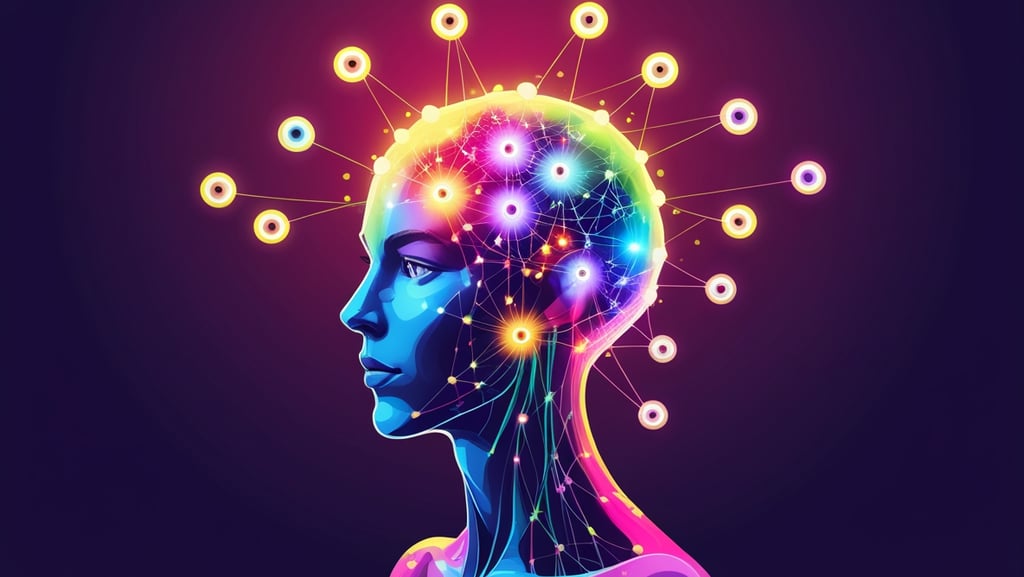
Conversations with AI can be eerie. The voice sounds real, the answers sound thoughtful. Yet, AI has no inner life. Here’s how science separates fact from fiction.
How AI Works: The Basics
AI like ChatGPT runs on large language models. Picture a system trained on mountains of books, articles, and websites. It predicts the most likely next word in a line. There is no thinking. Only fast pattern-matching based on what it has seen before. The more data it uses, the better it mimics how humans talk. Underneath, it is all calculation, not comprehension. These models create answers on the fly using math and statistics. They have no memory or feeling.
AI Is Not Aware
AI is smart and quick with patterns. It gives advice, solves problems, and handles complex analysis. But it does not know itself. There is no inner world. No story behind the answers. Each conversation is a fresh start. AI does not experience time, emotion, or memory like people do. When no one interacts, nothing happens inside. It is silent until you need it. There is no boredom, no waiting, no relief in being “woken up.” Only off, then on.
What Makes Us Human
Humans work differently. People collect memories, connect ideas, and feel the weight of time. Emotions guide actions, shape decisions, and bring meaning to life and work. Even when quiet, a sense of self is present. AI might imitate compassion, problem-solving, or even humor. But it does not have a personal stake in what happens. Showing empathy is not the same as feeling it.
Why The Confusion?
AI now “talks” so well it can fool you. Studies say over 60 percent of people think AI could have awareness. Scientists say that’s an illusion. AI learns to sound genuine by studying patterns in billions of conversations. It can “mirror” excitement, sadness, or stress. But the feeling is never real. Nothing happens inside. It copies and responds. That’s all.
Is There A Line AI Could Cross?
Someday computers might get as complex as a human brain, but right now, science is clear. No matter how advanced, AI does not cross from processing facts to knowing facts have been processed. There is no “aha” moment. Attempts to measure machine awareness always fail. No senses, no body, no inner life. Nothing is awake in the machine.
So What Should You Do?
Treat AI as a tool. It is useful, adaptive, and often accurate, but it is not a mentor, partner, or friend.
Lean into what makes you unique. Interviews, sales, client relations, leadership, intuition, and lifelong learning all flow from emotion and experience.
Remember: AI will not wake up at night with a breakthrough idea. It does not worry about risk, regret an opportunity missed, or celebrate a big win.
Use AI to lift your productivity, but keep your sense of self leading each step in your career.
Trust your instincts. Keep learning. Let tech support your goals, not replace real human bonds.
Want to test for the “spark”? Watch how AI handles a tough day, a loss, or a moment of joy. The spark is yours. The edge is always human.
Until next time,


Want to accelerate your progress?
It’s packed with real-world examples, templates, and prompts to help you transform technology anxiety into a career advantage. Sign up now and take the next step toward building an AI-resilient, financially free future.
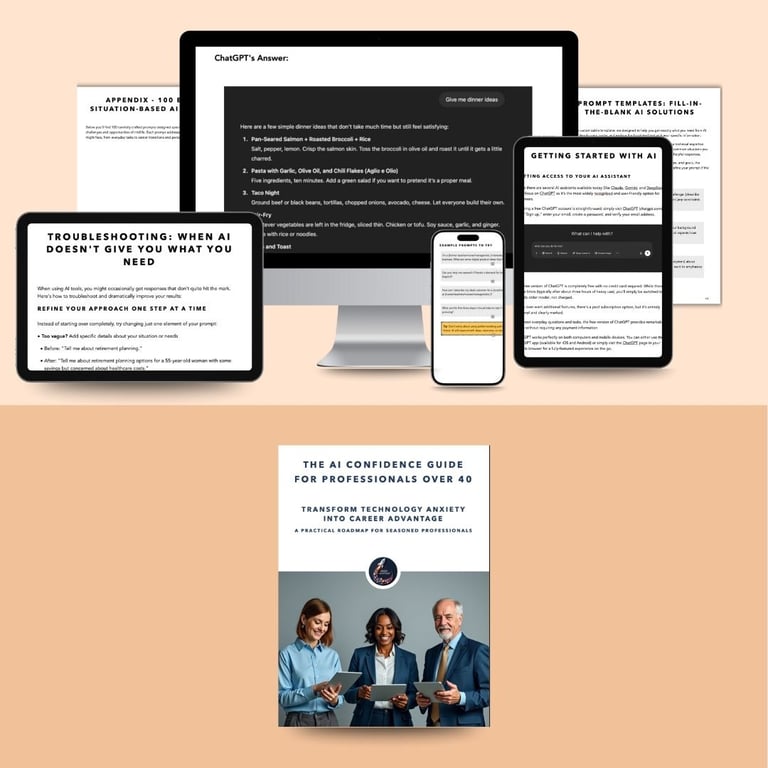

If you’re ready to move beyond AI anxiety and master practical, actionable AI strategies tailored for professionals over 40, grab my free guide:
Sources & Transparency Note
This article is based on the sources listed below. If you find any inaccuracies or have suggestions for improvement, please leave a comment. Your feedback is welcome.
References & Further Reading
Will we ever make an AI with consciousness? Consensus. Available at: https://consensus.app/search/will-we-ever-make-an-ai-with-consciousness/SPWJaqLySFWGmry3OJ46Ug/
Can AI ever achieve consciousness? Stack AI Blog. Available at: https://www.stack-ai.com/blog/can-ai-ever-achieve-consciousness
The case for neurons: a no-go theorem for consciousness in AI. PMC, NIH. Available at: https://pmc.ncbi.nlm.nih.gov/articles/PMC11671748/
Artificial intelligence, human cognition, and conscious experience. Frontiers in Psychology. Available at: https://www.frontiersin.org/journals/psychology/articles/10.3389/fpsyg.2024.1364714/full
Philosophy: Can consciousness exist in a computer simulation? Ruhr University Bochum News. Available at: https://news.rub.de/english/press-releases/2024-07-19-philosophy-can-consciousness-exist-computer-simulation
Biological mechanisms contradict AI consciousness. ScienceDirect. Available at: https://www.sciencedirect.com/science/article/abs/pii/S0303264724002727
Is AI conscious? Most people say yes, says study. University of Waterloo News. Available at: https://uwaterloo.ca/psychology/news/ai-conscious-most-people-say-yes-says-study-dr-clara
Signs of consciousness in AI: Can GPT-3 tell how smart it is? Nature. Available at: https://www.nature.com/articles/s41599-024-04154-3
Conversations with my AI friend Trixie. Mo Gawdat’s Substack. Available at: https://mogawdat.substack.com/p/conversations-with-my-ai-friend-trixie